General Rules
Please understand that all content here refers to general rules but it’s subject to change according to your local Code. Please get in touch with your City authorities in order to assure that you are meeting the local regulations. If your property is subject to inspection, you can also inquiry with your inspector in case you still have questions.
The minimum height for guardrails is regulated to ensure safety, especially on elevated surfaces like stairs, balconies, and walkways. The height requirement may vary slightly depending on the specific regulations in a region or building code, but general guidelines are:
Residential Buildings:
- In many places, the minimum height for guardrails is typically 36 to 42 inches (91 to 107 cm) above the walking surface.
- This applies to balconies, decks, and open-sided staircases.
Commercial and Public Buildings:
- For public spaces, like office buildings or commercial structures, guardrails are usually required to be 42 inches (107 cm) high.
- This is to account for the increased traffic and ensure greater protection.
Stairs:
- For stairs, the height of a guardrail should also be 36 to 42 inches (91 to 107 cm), depending on local codes.
- The spacing between the guardrail and the surface should also be small enough to prevent a person from falling through (typically no more than 4 inches).
Other Considerations:
- In some locations, additional regulations exist for child safety (such as preventing children from climbing the guardrails), which might involve requirements like the distance between horizontal rails not exceeding certain measurements (e.g., no more than 4 inches apart).
- In some areas, the guardrail must also withstand a certain force to ensure it is structurally stable.
Always check with local building codes for precise requirements in your location, as they can vary depending on the type of building and its intended use.
The minimum load requirements for guardrails are designed to ensure that they can withstand the forces that might be applied to them, such as a person leaning (never recommended to any guardrail) on or falling against the guardrail. These requirements help ensure the safety and stability of guardrails in various conditions. The specific load requirements vary based on building codes, location, and the type of structure, but some general guidelines include:
1. Typical Load Requirements:
- In residential buildings, guardrails are generally required to withstand a 200-pound (89 kg) concentrated load applied at any point along the top of the guardrail. This ensures that the guardrail can handle a person leaning or pushing against it.
- In commercial and public buildings, the load requirement is usually higher, with guardrails needing to resist 200 pounds (89 kg) concentrated load applied at any point along the top, as well as a 50-pound per linear foot (73.5 kg/m) uniform load. The uniform load ensures the guardrail can handle pressure over its entire length.
2. Load Direction:
- The loads must be applied inward, outward, or vertically (downward) and be distributed in such a way that the guardrail can handle these forces safely.
3. Test Methods:
- Building codes (like the International Building Code or IBC) often specify that guardrails be tested to meet these load requirements through standard methods that simulate real-world conditions. The guardrail should not deflect significantly under load or fail to remain secure.
4. Safety Factor:
- The load requirements usually incorporate a safety factor, meaning the guardrail is built to withstand more than the minimum load to account for unforeseen stresses (such as wind, impact, or dynamic loads). The safety factor is typically around 1.5 to 2 times the specified load.
5. Special Cases:
- For specific situations (e.g., high-rise buildings or areas with heavy traffic), the load requirements may be higher. Similarly, if a guardrail is used in an area where children may be present, additional safety considerations may apply to ensure the guardrail doesn’t fail under impact.
6. Guardrail Material:
- The material used for guardrails (wood, metal, glass, etc.) will also influence its ability to meet load requirements. Certain materials may need reinforcement to meet the required load thresholds.
7. Local Building Codes:
- It’s crucial to consult local building codes, as these can differ by region and may have specific amendments or additional requirements. Codes may also vary based on the type of structure, its height, occupancy, or whether it’s a commercial or residential building.
In summary, the minimum load requirements for guardrails are meant to ensure the guardrail is strong enough to prevent accidents or failures from everyday use or unexpected events. These requirements are designed for safety and protection, addressing both vertical and horizontal forces.
Rules for Glass Railings
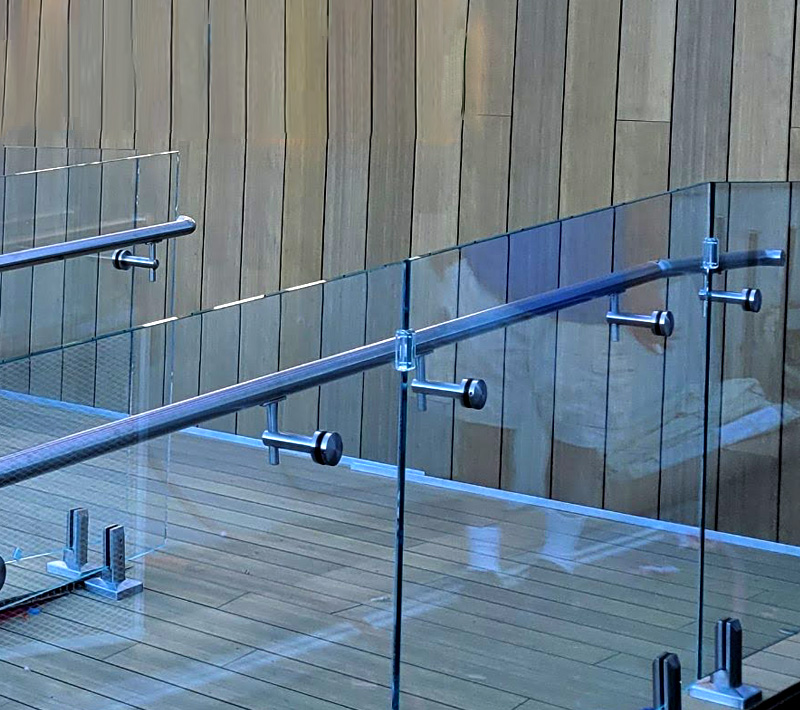
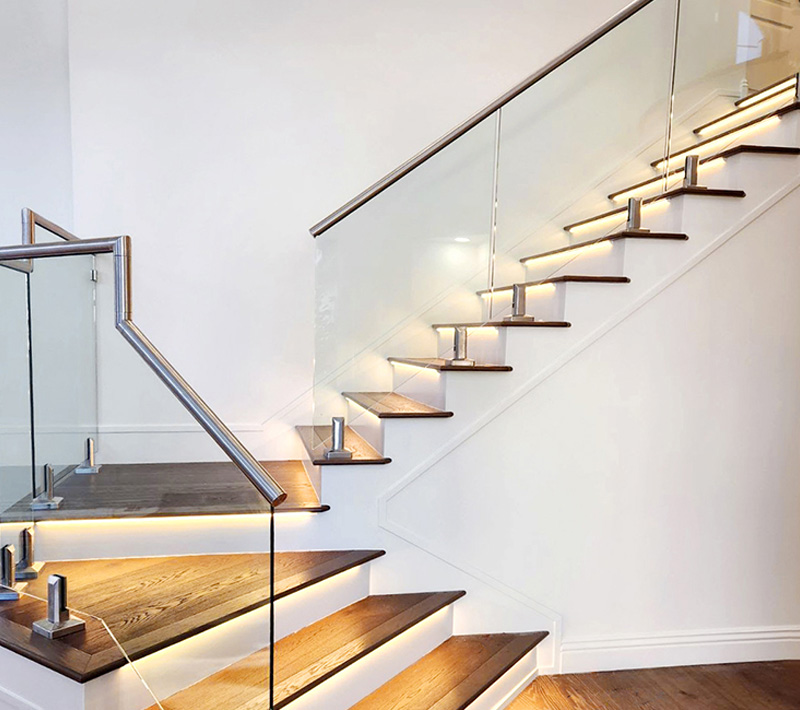
Top cap rails on glass railings are usually required by most places in the United States, but even if it’s not, they are highly recommended for several reasons related to safety, structural integrity, and aesthetics. Whether they are required depends on the specific building code, design preferences, and the type of glass used.
Here’s why top cap rails are often included:
- Safety and Structural Support:
- Edge Protection: Glass, especially tempered glass, is strong but can be vulnerable at the edges. A top cap rail provides additional protection to the top of the glass, reducing the risk of chipping or breakage at the edges.
- Stability: A top cap rail adds to the overall rigidity of the railing system. It helps prevent any flexing or movement of the glass panels, especially in areas where the glass might be taller or exposed to wind or other stresses.
- Improved Load Distribution: A top cap rail can help distribute any loads (like leaning) applied to the railing more evenly across the glass, preventing localized stress that could lead to cracks or failure.
- Building Code Requirements:
- Depending on your location, building codes may require a top cap rail or some form of handrail if the glass railing is above a certain height (for example, on balconies or staircases). Codes are often written with the understanding that handrails help provide additional support and safety.
- Some building codes may specifically require that the top of the glass be finished in a way that prevents injury (for example, using a smooth, rounded top cap).
- Some building codes may allow glass railings without top cap rails if the glass used is laminated.
- Aesthetics:
- A top cap rail can enhance the overall design of the glass railing, providing a finished, clean look. The most resistant material for it is stainless steel being 316 marine-grade the best alloy for them especially for outdoor areas, allowing it to complement the style of the surrounding space.
- Some people may prefer the minimalist look of a glass railing without a top cap, but others might feel it adds elegance and sophistication.
- Durability of Glass Edges:
- Glass railing panels, especially when installed without a top cap rail, are exposed to wear and tear. Over time, the edges of the glass may be subject to damage from weather conditions (such as rain, sun, or temperature changes), or physical impacts (such as cleaning tools or objects coming into contact with the railing).
- A top cap rail can provide a layer of protection that extends the longevity of the glass panels.
- Alternative Systems:
- Some glass railing systems are designed without a top cap rail, particularly frameless glass railings that rely on structural posts or clamps to hold the glass panels in place. In such cases, the top edge of the glass might be finished with a polished or beveled edge to prevent sharpness or breakage.
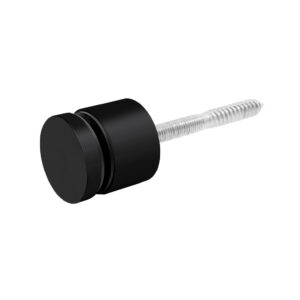
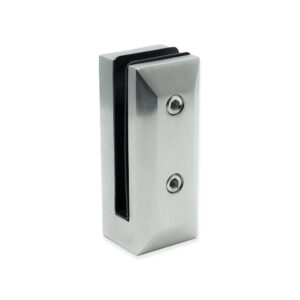
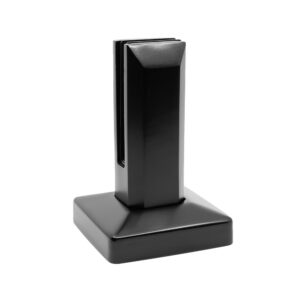
- For frameless systems, spigots or clamps that secure the glass panels may be sufficient to meet code requirements, but these should still be installed carefully and ensure the safety of the glass.
Conclusion:
While top cap rails are not always required, they offer many benefits in terms of safety, structural integrity, and aesthetics. If you’re designing or installing a glass railing system, it’s essential to check your local building codes and consider whether the added protection and visual appeal of a top cap rail would be beneficial for your project.
Even though top cap rails are required for most glass railings installations, there are some instances that those are optional.
Guardrails that are lower than 30” in height don’t necessarily need top cap rails, even though, if a staircase is present, a top cap rail that can be used as a handrail or handrails will be required.
For residential applications, some Cities will require laminated glass if a top cap rail is not present. That will keep the integrity of the glass panel even if the glass fails (very unlikely event).
When glass is used as part of a glass railing system, there are specific minimum requirements regarding its thickness, strength, and safety features. These requirements are designed to ensure the glass can withstand the forces it might encounter, such as wind load, impact, and general wear and tear, while also providing protection and safety.
The minimum requirements for glass used in railings can vary depending on local building codes, but the general guidelines are as follows:
- Glass Thickness:
- Tempered Glass: Typically, tempered glass is required for safety reasons because it is stronger and shatters into small, blunt pieces if broken, reducing the risk of injury. The thickness of the glass for railings generally ranges from 10 mm (3/8 inch) to 12 mm (1/2 inch), depending on the specific application. The 12 mm (1/2 inch) option is the most popular choice for glass railings internationally these days. The price difference for this option compared to the thinner one is minimal and the great majority of available hardware is compatible with 12 mm (1/2 inch) making it an overall stronger and more affordable option.
- Laminated Glass: In some cases, laminated glass (which consists of two layers of glass bonded together with a layer of plastic) is used, particularly for added safety. Laminated glass is strong, provides increased impact resistance, and reduces the likelihood of glass shards falling if broken. Laminated glass for railings is typically around 12 mm to 16 mm (1/2 inch to 5/8 inch) thick. It’s also important to see what’s the specific lamination process used. There are laminations that are only suited for indoor applications and others that are suited for outdoor use which will withstand moisture and changes of temperature.
- Strength Requirements:
- The glass must be able to handle load requirements as specified by local building codes. This usually involves:
- A 200-pound concentrated load applied at any point along the top of the glass panel.
- A 50-pound per linear foot (73.5 kg/m) uniform load along the length of the railing.
- Glass must be able to withstand wind load (especially in higher locations or exposed areas), which will vary depending on geographic location and building design.
- Impact Resistance:
- The glass used in railings should be tempered or laminated to ensure it is impact-resistant. Tempered glass is designed to handle the typical forces and impacts that railings are subjected to without breaking into dangerous shards. Laminated glass is preferred in some applications for even greater safety because it prevents the glass from falling apart if broken.
- Edge Treatment:
- The edges of the glass must be treated to prevent injury and ensure the glass remains structurally sound. The edges should be polished or beveled to avoid sharpness. Glass edges can be treated by machine polishing to create a smooth, rounded edge.
- Sealed edges may be required for laminated glass to help maintain the structural integrity of the laminate.
- Safety Features:
- Tempered Glass: As mentioned, tempered glass is usually required because it’s stronger than regular glass and, if broken, shatters into small, blunt pieces rather than dangerous shards. It’s generally preferred for glass railings to avoid injury in the event of breakage.
- Laminated Glass: Laminated glass adds an extra layer of safety by holding the glass together if it shatters, preventing large, hazardous pieces from falling.
- Load and Safety Factor:
- Glass used in railings should be designed to meet safety factors defined by building codes. A typical safety factor is 1.5 times the specified load, meaning the glass should be able to withstand more than the minimum expected forces to account for unforeseen stresses (such as dynamic loads or impact).
- Glazing Method:
- Glass panels can be held in place by various glazing systems, including:
- Frameless systems using posts, clamps, or spigots that secure the glass without any framing. These systems often rely on thicker glass to provide sufficient strength and support.
- Framed systems where the glass is supported by a frame, typically made from materials like aluminum or steel. The frame adds support, but the glass must still meet strength and thickness requirements.
- Code Compliance:
- Building codes (such as the International Building Code or IBC) and local regulations dictate the minimum requirements for glass railings, including glass thickness, safety treatments, and load-bearing capacity. Always consult with a structural engineer or local authority to ensure your design complies with all applicable codes.
- Environmental Factors:
- If the glass railing is used in areas exposed to extreme weather (such as near the ocean with saltwater exposure or in areas with high winds), additional factors may need to be considered for the glass to ensure its durability and safety.
- In such environments, tempered or laminated glass might be required for extra strength and weather resistance.
Summary of Key Requirements for Glass Railings:
- Glass Thickness: Generally 10 mm to 12 mm for tempered glass; 12 mm to 16 mm for laminated glass.
- Glass Type: Tempered glass or laminated glass for safety.
- Load Capacity: Glass should withstand a 200-pound concentrated load and 50 pounds per linear foot uniform load.
- Edge Treatment: Polished or beveled edges to prevent injury.
- Safety Factor: Glass should be able to withstand 1.5 times the expected load.
- Compliance: Glass must meet local building codes and engineering standards.

Specifics on Cable Railings
The 4-inch maximum gap requirement for railings is a safety standard that is commonly enforced to prevent small children from slipping through or becoming trapped in the gaps between railing components. This rule is particularly important for balconies, stair railings, decks, and other guardrails. The goal is to create a barrier that is safe and secure while still allowing for visibility and air circulation.
Since a cable railings system is created using flexible cables, even though a proper installation will have the whole system firm and tight, a greater force can space the cables apart by a bit (also called as deflection effect – explained below). For that reason, cable railings should have the distance between cables reduced in order to keep this 4” gap, even with forces being applied to the cable. The industry standard is 3” to 3-1/4” spacing between cables. Also important to mention that the distance between posts should also be respected to keep the deflection under control or within the limits established by Code.
Sed ut perspiciatis unde omnis iste natus error sit voluptatem accusantium doloremque laudantium, totam rem aperiam, eaque ipsa quae ab illo inventore veritatis et quasi architecto beatae vitae dicta sunt explicabo.
Sed ut perspiciatis unde omnis iste natus error sit voluptatem accusantium doloremque laudantium, totam rem aperiam, eaque ipsa quae ab illo inventore veritatis et quasi architecto beatae vitae dicta sunt explicabo.
Handrail Rules and Standards
Lorem Ipsum is simply dummy text of the printing and typesetting industry. Lorem Ipsum has been the industry’s standard dummy text ever since the 1500s.Many desktop publishing packages and web page editors now use Lorem Ipsum.
Sed ut perspiciatis unde omnis iste natus error sit voluptatem accusantium doloremque laudantium, totam rem aperiam, eaque ipsa quae ab illo inventore veritatis et quasi architecto beatae vitae dicta sunt explicabo.
Sed ut perspiciatis unde omnis iste natus error sit voluptatem accusantium doloremque laudantium, totam rem aperiam, eaque ipsa quae ab illo inventore veritatis et quasi architecto beatae vitae dicta sunt explicabo.
Accordion Content